
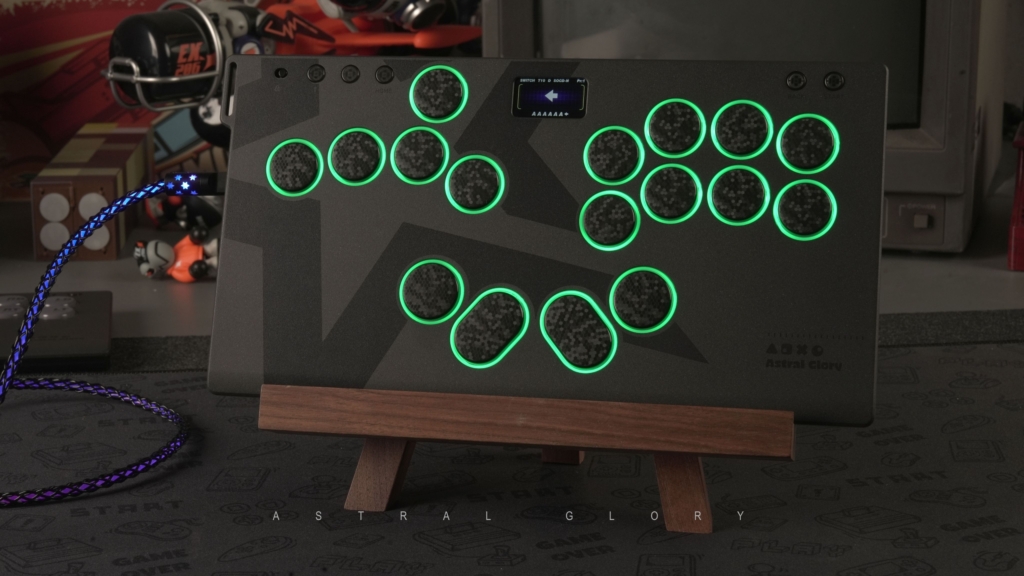
Fighting Game Controllers at CEO 2026: What Are the Pros Using?
CEO 2026 has just wrapped up in Orlando, bringing another exciting weekend of competitive fighting games to the community. With games such as Street Fighter 6, Tekken 8, 2XKO, and Marvel Tōkon: Fighting Souls on the lineup, the event once again showcased the variety of today’s fighting game scene. Beyond the matches, CEO also highlights an interesting question for players: what fighting game controllers are competitors choosing? From traditional fight sticks to leverless controllers and gamepads, different setups continue to coexist at the highest levels of competition.
Why Fighting Game Controllers Matter at CEO
A fighting game controller serves as an instrument for pushing the buttons, it becomes an embodiment of the player’s hand and memory. In a competitive match, players constantly perform directional inputs, attacks, defensive movements, special moves, and combos, often within fractions of a second. When the pressure is on, there is little time to think about where each button is.
That is why controller preference can be highly personal. Some players have spent years using traditional arcade sticks and are comfortable with the physical movement of a joystick and the familiar arcade-button layout. Others prefer leverless controllers, where dedicated directional buttons provide a different approach to movement and execution. Gamepads remain another popular option, especially for players who are already comfortable with their familiar layout.
At an event like CEO, these different approaches can exist side by side. Players are not necessarily choosing their controllers based on trends; many simply stick with the setup they have practiced with for years. For newer players, this is an important takeaway: there is no single controller that automatically makes you better at fighting games. The best choice is often the one that feels natural, reliable, and comfortable enough to keep practicing.
The Three Main Types of Fighting Game Controllers
When looking at the modern fighting game scene, three controller categories appear most often: fight sticks, leverless controllers, and gamepads.
Each one approaches movement and execution differently.
Fight Sticks
Traditional fight sticks are perhaps the most recognizable fighting game controllers.
Instead of using a directional pad or analog stick, a fight stick uses a physical joystick for movement and a row of large arcade-style buttons for attacks.
The biggest advantage is familiarity for players who enjoy the arcade experience. The joystick provides physical feedback, while the large buttons are easy to hit quickly and accurately.
Fight sticks also have a long history in competitive fighting games. Their design is closely connected to the arcade roots of the genre, and many experienced players have developed their muscle memory around this type of controller.
For some players, that physical joystick movement simply feels right.
Leverless Controllers
Leverless controllers take a completely different approach.
Instead of using a joystick, they use individual buttons for directional inputs such as left, right, down, and up. This is why they are often called all-button controllers.
The appeal is largely about input consistency and customization.
Because each direction is controlled by a separate button, players can develop very precise finger movements without physically moving a joystick. Many leverless controllers also provide programmable inputs, allowing players to customize their layouts.
This has made leverless controllers increasingly visible in competitive fighting games.
For players who are willing to spend time developing new muscle memory, the all-button layout can offer a very different way of approaching movement and execution.
Gamepads
Then there is the controller most players already know: the standard gamepad.
Gamepads remain a serious option for fighting games because of their familiarity, accessibility, and portability. Players can use a directional pad or analog stick for movement while accessing attacks through the face buttons and shoulder buttons.
A gamepad can also be particularly convenient for players who play several different genres rather than fighting games exclusively.
There is no rule saying that competitive players have to use specialized arcade hardware.
Sometimes the controller you’ve already spent hundreds of hours using is the one that feels best.
Why Are Leverless Controllers Getting More Attention?
The usage of leverless controllers in the competitive gaming scene has increased greatly, as they offer gamers a new way to move and perform. Rather than making use of a joystick, the leverless controller has different buttons for different directions which players can use through the way their fingers are positioned, providing direct movement control through their fingers.
The button-based design of leverless controllers helps ensure consistency in inputs, which is the main reason such controllers have become popular in events held during gaming competitions. However, switching to leverless is not an instant upgrade. A gamer that is used to arcade controls may need some time to train their new muscles since the movements of the joystick are replaced by separate button presses. In all cases, the choice of the device used by a professional gamer is not fully justified in terms of its superiority over other devices. More often than not, it just shows years of practice. The best controller is the one that helps the gamer feel comfortable, confident, and effective.
Are Fight Sticks Still Relevant?
Absolutely. The rise in popularity of leverless controllers has not rendered traditional fight sticks unnecessary. As evidenced by recent discussions on Reddit, there are many players who prefer the feeling of a joystick and buttons, knowing the iconic experience of an arcade-style controller. Some old-timer players appreciate the feeling of manipulating a lever, but others have been through years of training with it.
Moreover, there is a practical issue of not switching to this modern controller just because there is a hype around it: players who are often speaking about switching to this type of controller say that even experienced ones can get confused with this type of controller at some point. So, are fight sticks still relevant at CEO and other major tournaments? Definitely. If a fight stick feels natural and lets you execute consistently, there is little reason to abandon it simply because another controller type is becoming more popular.
What Makes a Good Fighting Game Controller?
Whether you prefer a fight stick, leverless controller, or gamepad, the best controller is not necessarily the most expensive one. A few practical factors can make a much bigger difference to your experience.
Input Responsiveness
Fighting games often demand precise timing, so consistent input registration matters. Reliable switches, buttons, and internal hardware can help you perform movements and attacks without worrying about missed or inconsistent inputs.
Button Layout
Layout is especially important for fighting games. A controller may have excellent hardware, but awkward button placement can make certain inputs uncomfortable or difficult to perform. For leverless controllers, directional-button placement, attack-button spacing, and the overall arrangement can strongly influence how quickly you develop muscle memory.
Comfort
A controller should remain comfortable beyond a few matches. Size, weight, button spacing, hand position, and overall shape can all affect how your hands feel during long practice sessions. Ergonomics may not seem important at first, but it can become much more noticeable after several hours of play.
Compatibility
Always check platform support before buying. Some controllers work directly with PC and certain consoles, while others may require additional adapters. If you regularly play across multiple platforms, wider compatibility can be a major advantage.
Customization
Modern controllers also offer more ways to personalize the experience. Depending on the model, you may be able to change keycaps, switches, button mappings, artwork, or RGB lighting. While some customization is purely aesthetic, remapping and hardware changes can also help players create a setup that better matches their preferences.
Does the Controller Used by a Pro Really Matter?
Seeing a professional player use a particular controller at CEO can be useful, but copying their setup does not guarantee better results. Professional players have often spent years building muscle memory around their chosen controller, making its layout feel almost automatic.
For newer players, the more important question is not “What controller does the best player use?” but “Which controller can I use comfortably and consistently?”
A controller should support your practice rather than make learning more difficult. Whether it’s a fight stick, leverless controller, or gamepad, familiarity and consistency usually matter more than simply following a professional player’s choice.
The Future of Fighting Game Controllers
What comes next for fighting game controllers will not be about replacing designs but rather allowing players to play in different ways. Arcade sticks are still very popular, while leverless controllers are experimenting with the arrangement of buttons, movement, etc. Gamepads are still practical for people looking for a familiar and universal option.
Controllers will keep evolving, implementing new systems for fighting games such as new mechanics, assists, etc. Programmable inputs and ergonomic or customized button layouts should become a standard in controller design in the near future. At the same time, there might be no definite “best” controller among all available options in the future. The variety of options will grow, allowing users to pick what seems to them the most favorable setup.
Conclusion
CEO 2026 proves to demonstrate that there is no one true better fighting game controller. Fight sticks, leverless controllers, or gamepads can perform well if they align with the player’s preference and experience.
Choosing the controller that you feel comfortable with, which has a great feedback, and that motivates you to keep training is key. It is the controller that allows you to play but your skill is what determines your results.